How solar, wind, storage and hydropower combine into reliable mini-grids — and how we deliver them, from feasibility to commissioning.
A microgrid is a group of interconnected loads and distributed energy resources within clearly defined electrical boundaries that acts as a single controllable entity with respect to the grid — it can connect to and disconnect from the main grid to operate in grid-connected or islanded mode. (Definition: U.S. Department of Energy)
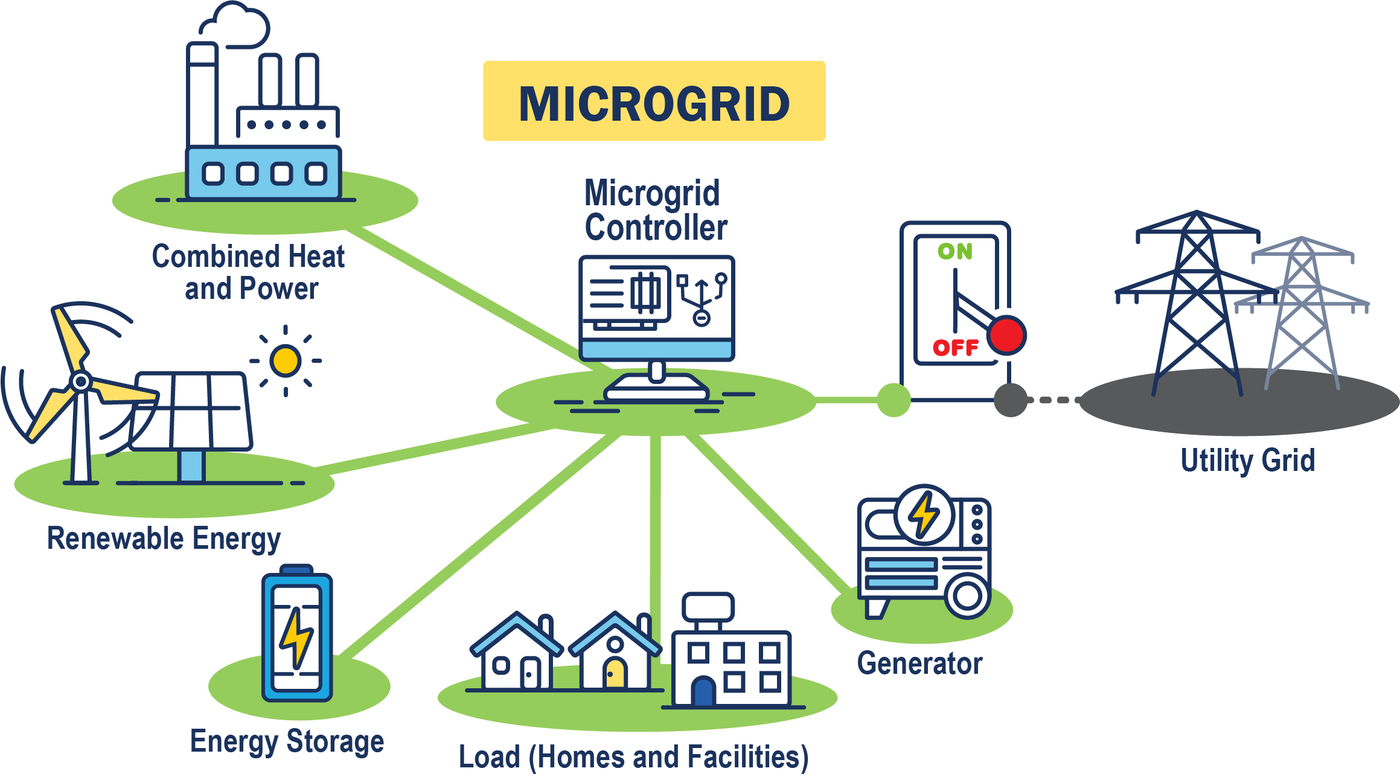
Solar PV, small wind, small hydro and backup gensets — the power sources of the microgrid.
Batteries — and pumped storage at larger scale — absorb surpluses and cover peaks.
Homes, factories, clinics and telecom sites — prioritized and managed intelligently.
The brain: real-time dispatch, source switching and protection coordination.
In grid-connected mode the microgrid exchanges power with the utility grid. When the grid fails or the link opens, the controller isolates the microgrid and local sources keep supplying local loads on their own — islanded operation, the reason microgrids are so valuable where the central grid is weak or absent.
Three building blocks of every hybrid system, animated.
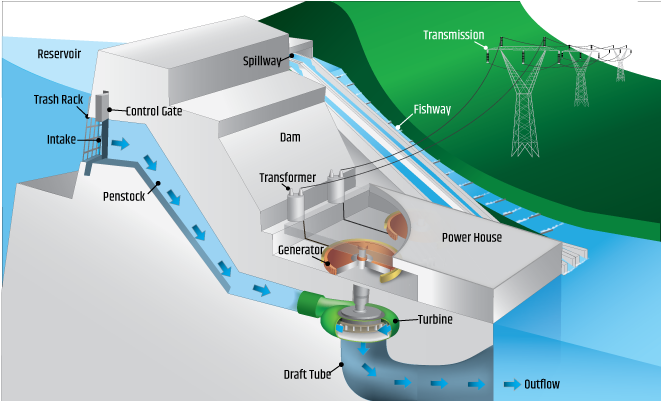
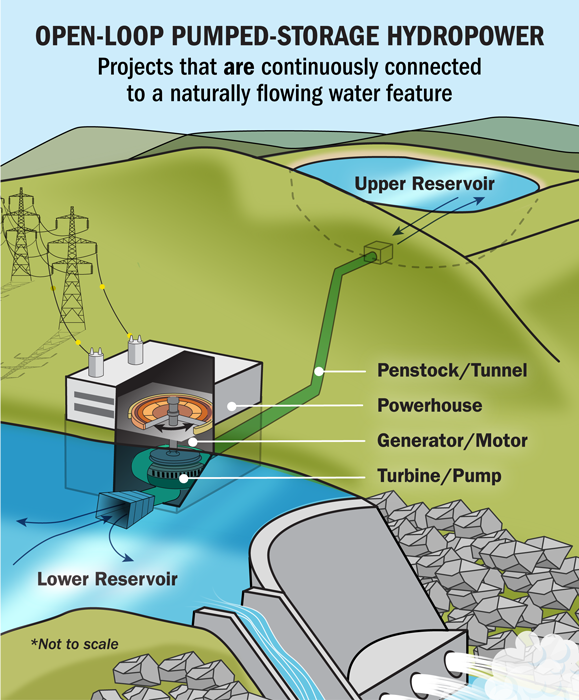
In mini-grids, batteries cover daily cycling. At larger scale, pumped-storage hydropower acts as the grid's battery: water is pumped uphill when power is abundant and released through turbines when it is scarce — still the largest share of energy storage capacity worldwide today.
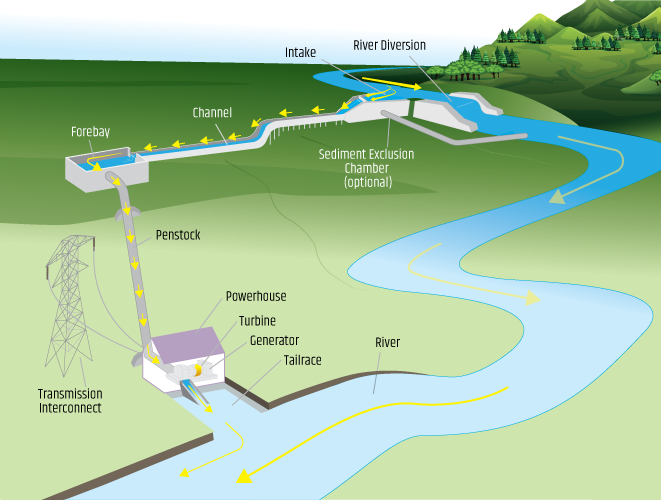
Solar and wind are variable; hydropower is dispatchable. Pairing run-of-river or dam hydropower with PV and wind lets the controller balance the system in real time, cutting diesel consumption dramatically while keeping supply stable — exactly the hybrid model we engineer for rural electrification.
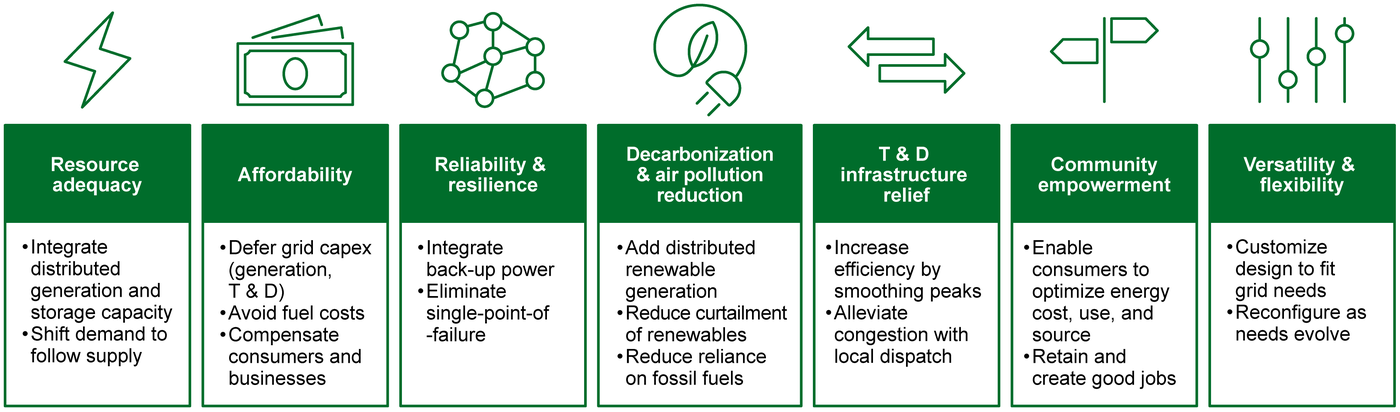
A virtual power plant (VPP) aggregates many small distributed resources — rooftop solar, batteries, EV chargers, flexible loads — into one portfolio that is dispatched like a single power plant.
The U.S. DOE estimates U.S. VPP deployment could reach 80–160 GW by 2030 (U.S. market context, DOE Liftoff report 2023). For African utilities, the same aggregation principles apply to mini-grids and distributed generation.
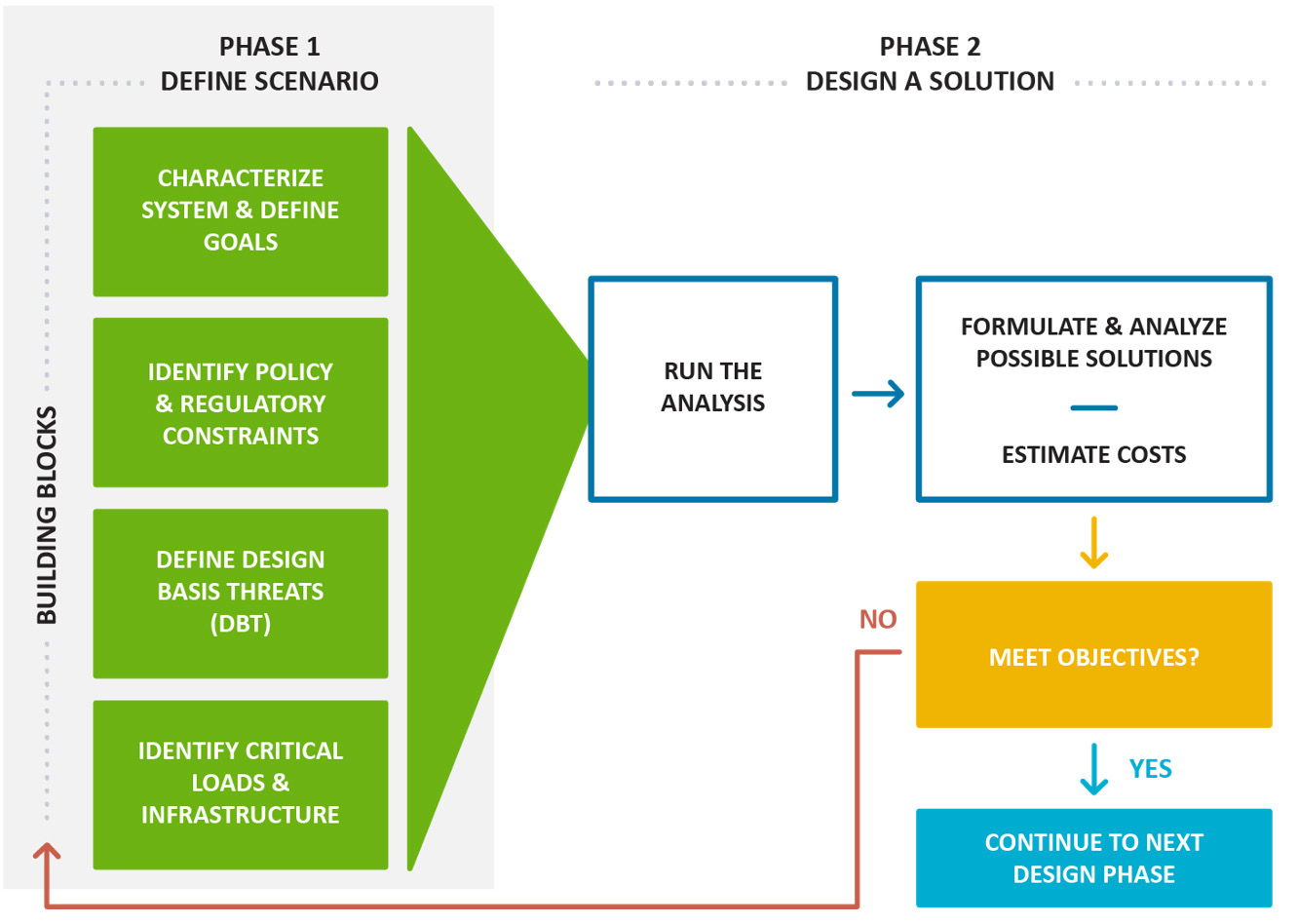
We apply these principles in turnkey projects: hybrid microgrids that combine hydropower with solar PV and diesel backup, orchestrated in real time by our SCADA platform.
Load profiling, source-mix optimization, battery sizing, simulation modeling.
Real-time dispatch, remote monitoring, automated failover between sources.
Panel procurement, inverter selection, mounting structures, grid-tie or off-grid.
Standby gensets with automatic transfer, mini-grid lines, transformers, smart metering.
U.S. Department of Energy, Grid Deployment Office — Microgrid Overview (Jan 2024). U.S. Department of Energy — Pathways to Commercial Liftoff: Virtual Power Plants (Sep 2023). Diagrams: DOE, public domain. Principle animations: originally created for this site.
Send us your site conditions and load profile — our engineers will come back with a first-pass system concept and sizing within 24 hours.
Get a Free Feasibility Assessment