Who builds, who pays, and where the bankable small-hydro opportunities sit in Madagascar — mapped from HIER’s 15 years as a local developer and operator, and TCH’s record of supplying turbines and electrical equipment to the island.
Madagascar has one of the lowest electrification rates in Africa. JIRAMA, the state utility, operates several isolated grids supplied largely by thermal plants, while most of the population — especially outside Antananarivo — still depends on firewood, candles and diesel gensets.
Hydropower is the country’s main renewable resource and already anchors many regional mini-grids. Public references commonly cite exploitable potential of several thousand megawatts, of which only a small share is developed — which is precisely why utilities, donors and private developers keep investing in run-of-river and small reservoir schemes.
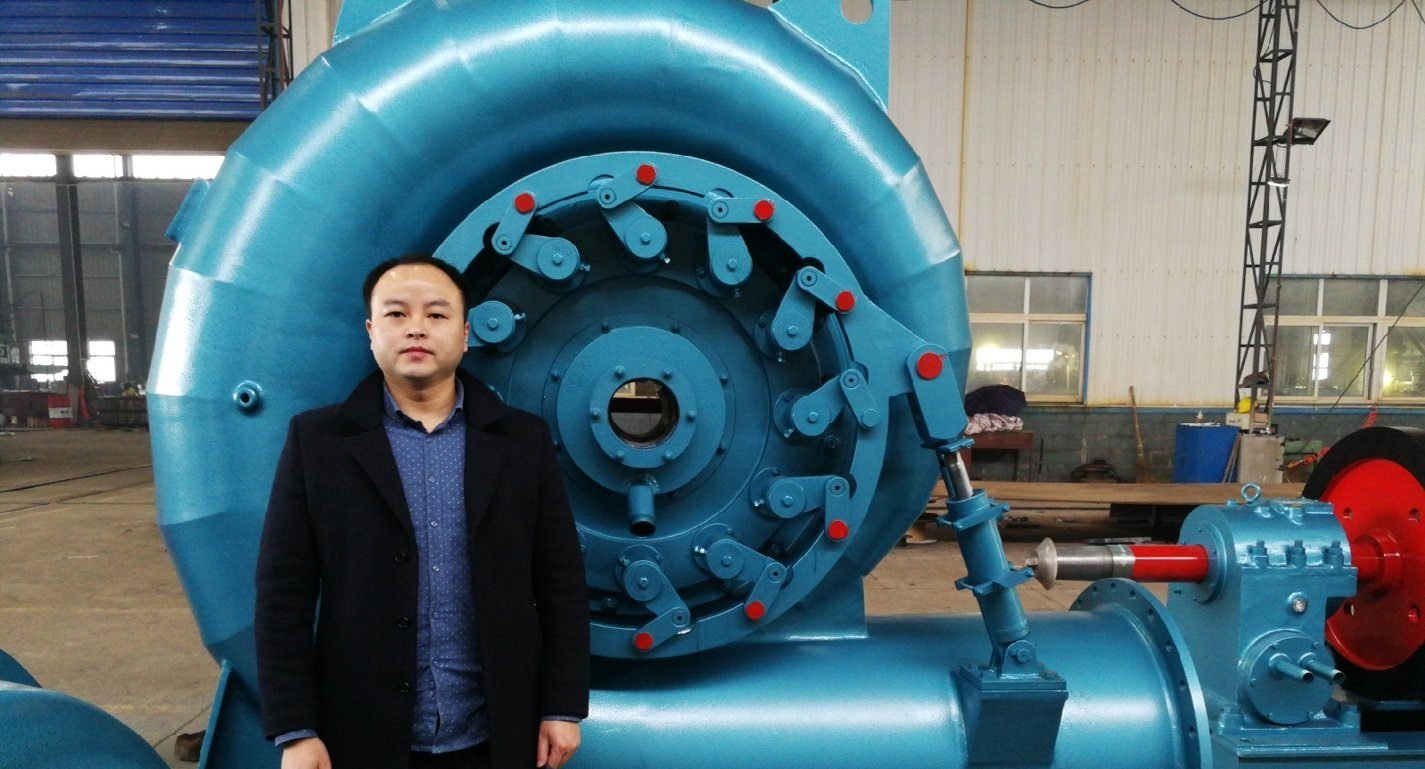
Horizontal Francis units manufactured by TCH for a 1.2 MW Madagascar hydropower plant.
JIRAMA — the state utility — is the anchor buyer. Its isolated regional grids need new generation, and it signs power purchase agreements (PPAs) with independent producers. Working with a local partner who understands JIRAMA’s processes shortens negotiation dramatically.
A developer in Madagascar typically secures the site, the water rights and the permits, signs the PPA, arranges financing, then appoints an EPC contractor. HIER has performed this exact role since 2010: it is one of the few genuinely local private hydropower developers and operators on the island.
ADER — the rural electrification agency — and development partners such as KfW, the EU, the AfDB, USAID, GIZ and GRET finance rural access programmes. Their projects increasingly require a private operator to build and run mini-grids, which opens a steady stream of small-hydro mandates below utility scale.
HIER operates seven hydropower sites across Madagascar’s regions — evidence that small hydro works commercially in this market when sized and operated correctly:
| Plant | Region | Year | What it proved |
|---|---|---|---|
| Sahanivotry HPP | SAVA | 2008 | First HIER project (as HYDELEC). Set the operating template for remote Madagascar mini-grids; today serves 400+ households and 12 commercial customers. |
| Maroantsetra HPP | SAVA (coastal) | 2010 | First plant under the HIER name. Backbone of the town’s electricity supply, including a 12 km MV distribution network to surrounding villages. |
| Ankerivato HPP | Sofia | 2013 | 560 kW — the largest plant of the 2013 rural rollout. Supplies 24/7 power along the Ankerivato–Befandriana corridor, run-of-river design. |
| Soavina + Ankilizato | Vakinankaratra & Diana | 2013–14 | Two village-scale plants — Soavina (60 kW) and Ankilizato (100 kW) — combined 160 kW. The replicable micro-hydro template. |
| Sahatona HPP | Alaotra-Mangoro | 2022 | 1.6 MW — crossed the 1 MW threshold. Powers rice mills and irrigation pumps in the Alaotra rice belt, in addition to households. |
| Ambatosia HPP | Boeny | 2022 | 1.7 MW twin of Sahatona. Together the pair passed the 4 MW mark, with Madagascar’s first pre-paid mobile-money metering. |

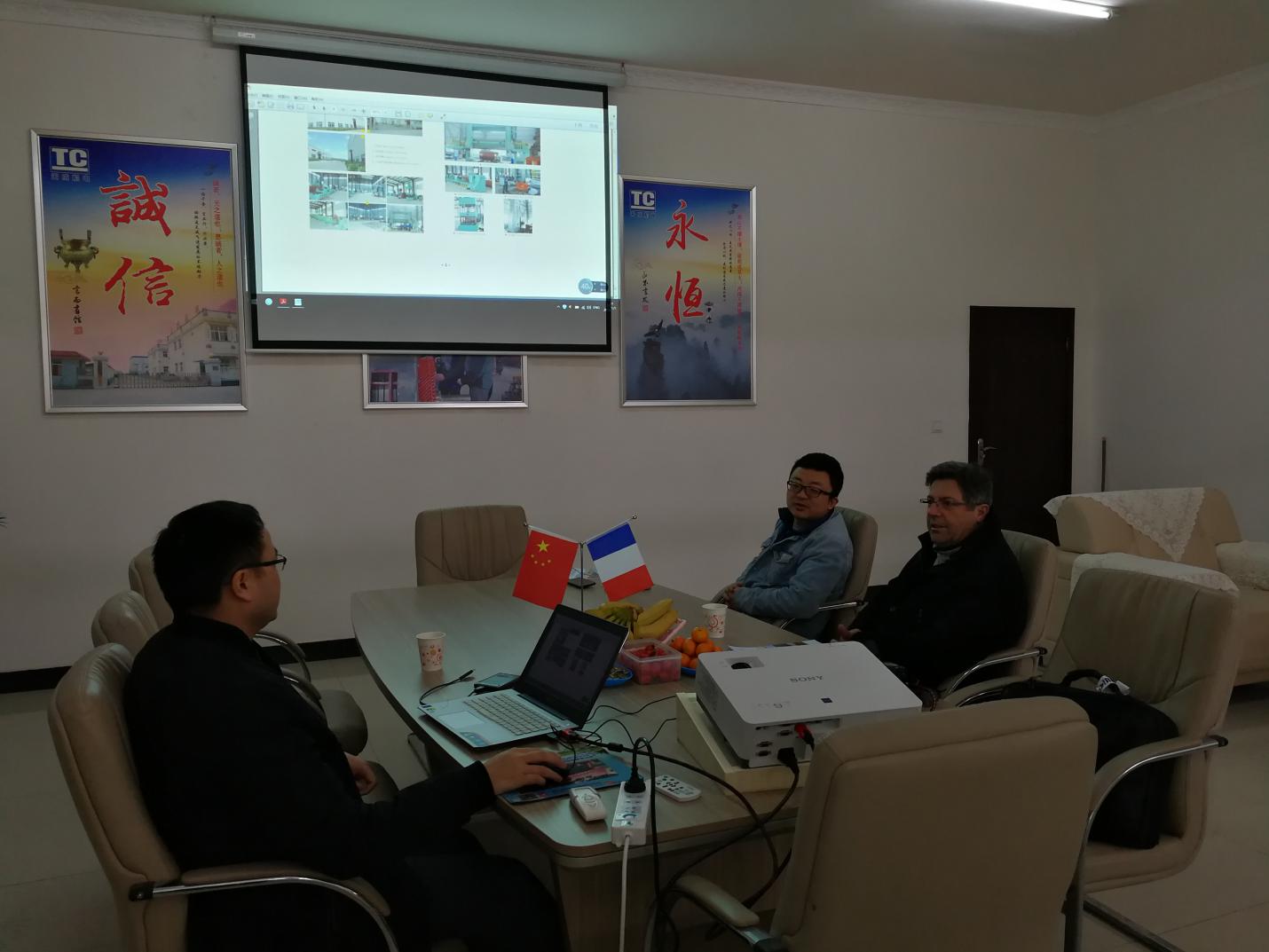
André FILLET (HIER) signing a 1.2 MW horizontal Francis contract with TCH for a Madagascar site.
The pipeline is no longer limited to village mini-grids. The Sahofika project — a roughly 192 MW public-private hydro scheme supported by the African Development Bank and other development financiers — signals that large private participation is now accepted. At the other end, donor-funded rural programmes keep creating 0.05–5 MW mandates that suit regional developers. HIER alone currently has six projects in construction representing more than 28 MW, with first power targeted from 2026.
You can engage us at three levels: as EPC contractor (engineering, Chinese manufacturing, delivery, installation, commissioning), as developer partner (site identification, feasibility, permitting and PPA support through HIER), or as O&M partner (local operation and maintenance after handover). Most of our Madagascar work is contracted with HIER as the local entity — one contract, one accountable team.
Send us the river, head, flow and target capacity. HIER’s local team verifies the site context; TCH’s engineers reply with a preliminary technical screening — free, within 24 hours.